A Little St. Croix Know-How
Island Customs Every Visitor Should Know
.svg)
Driving on St. Croix is its own adventure.
Driving on St. Croix is its own adventure.
There’s even a wonderful book about island life called Life in the Left Lane — a title that captures St. Croix remarkably well. Yes, we drive on the left. But getting around the island also has a rhythm, etiquette and personality all its own.
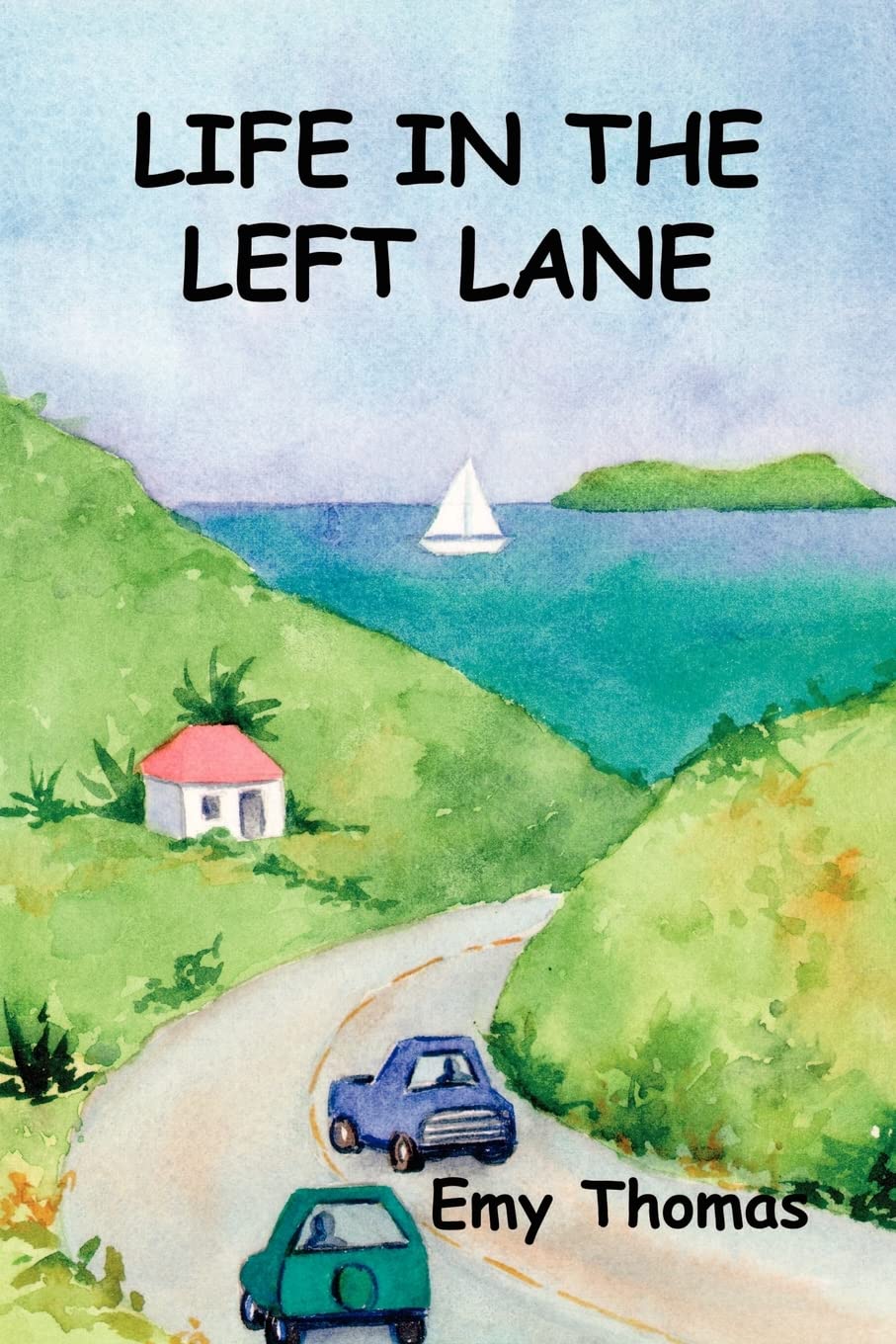
Purchase ‘Life in the Left Lane’ ahead your visit to St. Croix.
Oceans at Cane Bay is an easy walk to Cane Bay Beach, restaurants and beach bars, so you can happily spend a day without getting behind the wheel. But if you really want to experience St. Croix — from Frederiksted and the rainforest to Christiansted, the East End and Point Udall — you need a car.
And once you have one, the drive becomes part of the experience.
Yes, we drive on the left side of the road in St. Croix.
And, somewhat confusingly, most cars have the steering wheel on the left, too.
It sounds more intimidating than it actually is. After a little while, driving on the left starts to feel surprisingly natural. The moments when you’re most likely to forget aren’t usually when you’re traveling along a main road. They’re when you’re pulling out of a parking lot, restaurant or side street onto an empty road.
We have our own very simple system. Whenever Tim pulls out of a parking lot, I remind him:
“Stay left.”
That’s it. Two words. It works remarkably well.
Roundabouts take a little extra concentration at first, too. Traffic travels clockwise, so remember to look to your right for approaching vehicles before entering.
Some St. Croix roads are smooth and easy. Others have considerably more personality.
Potholes are a fact of island life. If the car in front of you suddenly veers toward the other side of the road, don’t assume the driver is distracted. There’s a good chance they know about a pothole you haven’t seen yet.
Drive a little more slowly than you might at home and give yourself room to maneuver, particularly after dark.
And then there are the roads that Google Maps insists are roads.
We’ve learned not to take that designation too literally.
We once found ourselves on Scenic Road East in a perfectly normal rental car — definitely not a high-clearance SUV. As we continued, the road became rougher and the grass growing down the middle became higher and higher. Eventually we were genuinely concerned that the car was going to bottom out and that we might not be able to get back out.
That’s when you learn an important rule of driving on St. Croix:
Trust your eyes more than Google Maps.
If a road looks questionable, don’t assume it gets better around the next bend. Sometimes turning around is the smartest decision you can make.
And some roads really do require the right vehicle. We wouldn’t recommend Mahogany Road west of the Domino Club without a serious off-road vehicle.
One of our favorite things about driving on St. Croix is that the roads have their own language.
If traffic is backed up and someone is trying to pull out of a side road, leave a little space and let them in. It’s customary here, and someone will eventually do the same for you.
And the horn doesn’t necessarily mean what it means on the mainland.
A quick little toot-toot can mean thank you. Or hello. Or simply I see you over there.
It’s friendly rather than aggressive — and once you understand it, you’ll probably find yourself doing it too.
There’s no prize for getting anywhere on St. Croix three minutes faster. Relax, let someone into traffic and enjoy the ride.
And by locals, we don't necessarily mean people.
Driving around St. Croix can occasionally feel like an informal wildlife safari.
You may spot white-tailed deer along the roadside, horses grazing nearby, goats wandering wherever goats have apparently decided they need to be — and mongooses making lightning-fast dashes across the pavement.
On the road out to Ham's Bluff Lighthouse, we've encountered goats grazing on the hillside with the Caribbean behind them. It's the sort of scene that makes you stop the car and forget for a moment where you were headed.
.jpg)
The mongooses come with a bit of island lore. They were introduced to St. Croix in the 1800s to control pests in the sugarcane fields. You'll often hear the story that they were brought here to get rid of poisonous snakes.
There are no venomous snakes on St. Croix.
There are, however, plenty of mongooses. You may not get a photograph of one — we never seem to — but you'll almost certainly see one streak across the road before you have time to reach for your camera.
It's another good reason not to drive too fast.
Wildlife isn’t the only thing to watch for. As you drive around St. Croix, you’ll see the remains of old sugar estates everywhere — most recognizable by the distinctive stone towers of former windmills rising above the landscape.
Some are beautifully preserved; others have been slowly reclaimed by the bush. Once you start noticing them, you’ll see them everywhere. They’re a visible reminder that nearly every drive across St. Croix passes through layers of the island’s history.
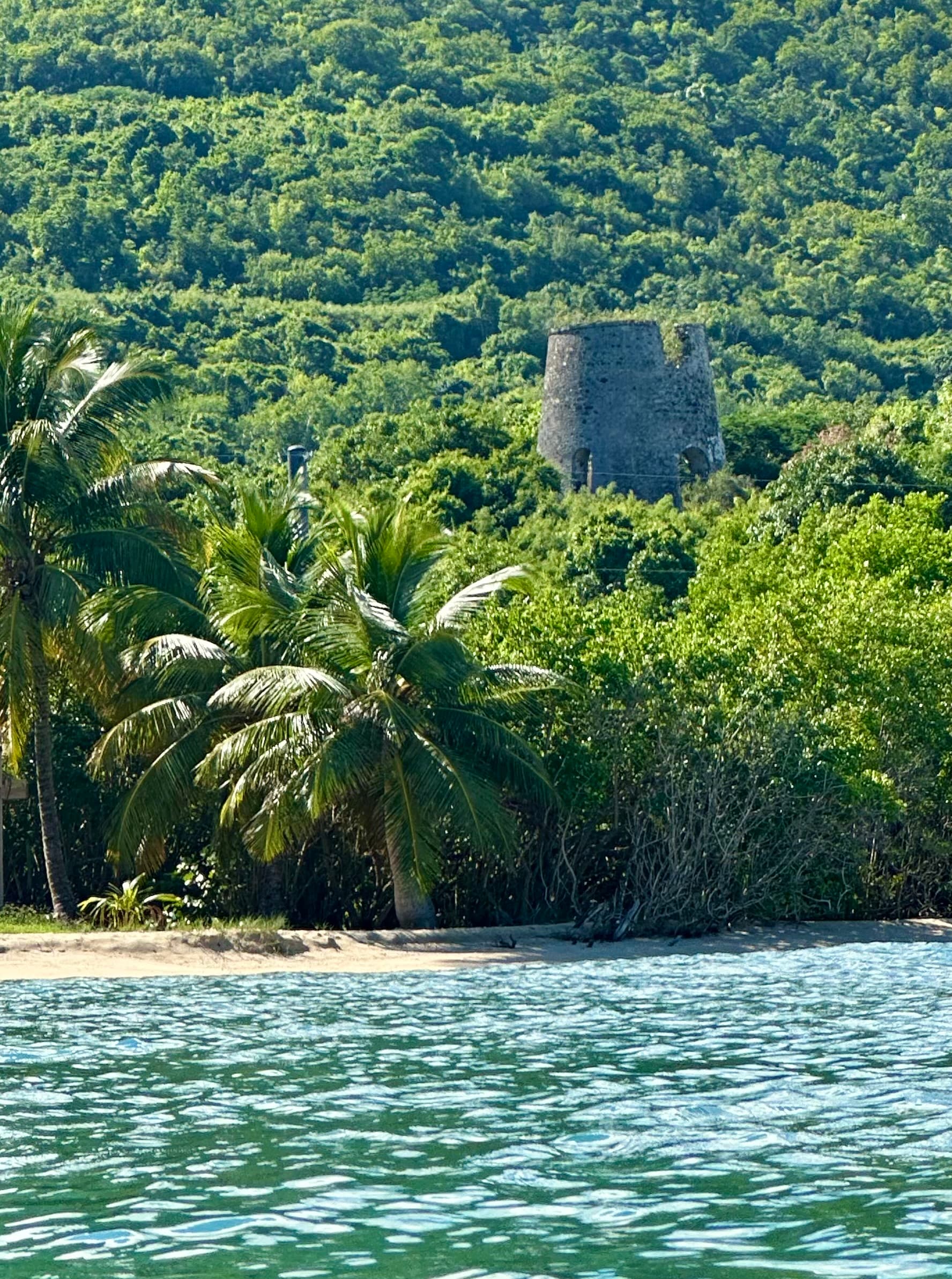
After enough time on St. Croix, you start to have favorite roads — not because they’re the fastest way to get somewhere, but because you simply love driving them.
We have two.
The Beast is one of St. Croix’s legendary hills. The climb is a serious challenge for runners and cyclists and has become part of the road’s lore.
We prefer going the other way.
Down.
As you descend toward the North Shore, there comes a moment when the Caribbean suddenly reveals itself below you.
It’s spectacular.
Even when you know exactly what’s coming, that first burst of blue still gets you.
Take it slowly. The road is steep and winding, and this is one drive where you definitely don’t want to miss the view because you’re in a hurry to reach the bottom.
Our other favorite is gentler.
Heading east from Oceans along the North Shore toward Salt River is one of those drives we never seem to tire of. The road winds through the lush hills of the North Shore, with beautiful glimpses of the Caribbean appearing along the way.
It’s not a famous scenic drive with designated overlooks and signs telling you where to stop.
It’s simply beautiful.
And because it’s right outside our door, it’s a road we’ve driven countless times and still appreciate every time we do.
.jpg)
If you have a few hours and a beautiful day, there’s another drive we’d recommend: head all the way east to Point Udall, the easternmost point of the United States.
We’d go even if there were nothing waiting for us at the end.
The drive itself is that beautiful.
Better yet, make it a loop.
From Oceans, head toward Christiansted and work your way east, hugging the South Shore as much as possible. As you get farther east, St. Croix begins to change. The landscape becomes drier and more open, with rolling hills, cactus and brilliant blue water.
Eventually you’ll reach Point Udall and the Millennium Monument. Get out, stretch your legs and take in the sweeping view over the Caribbean.
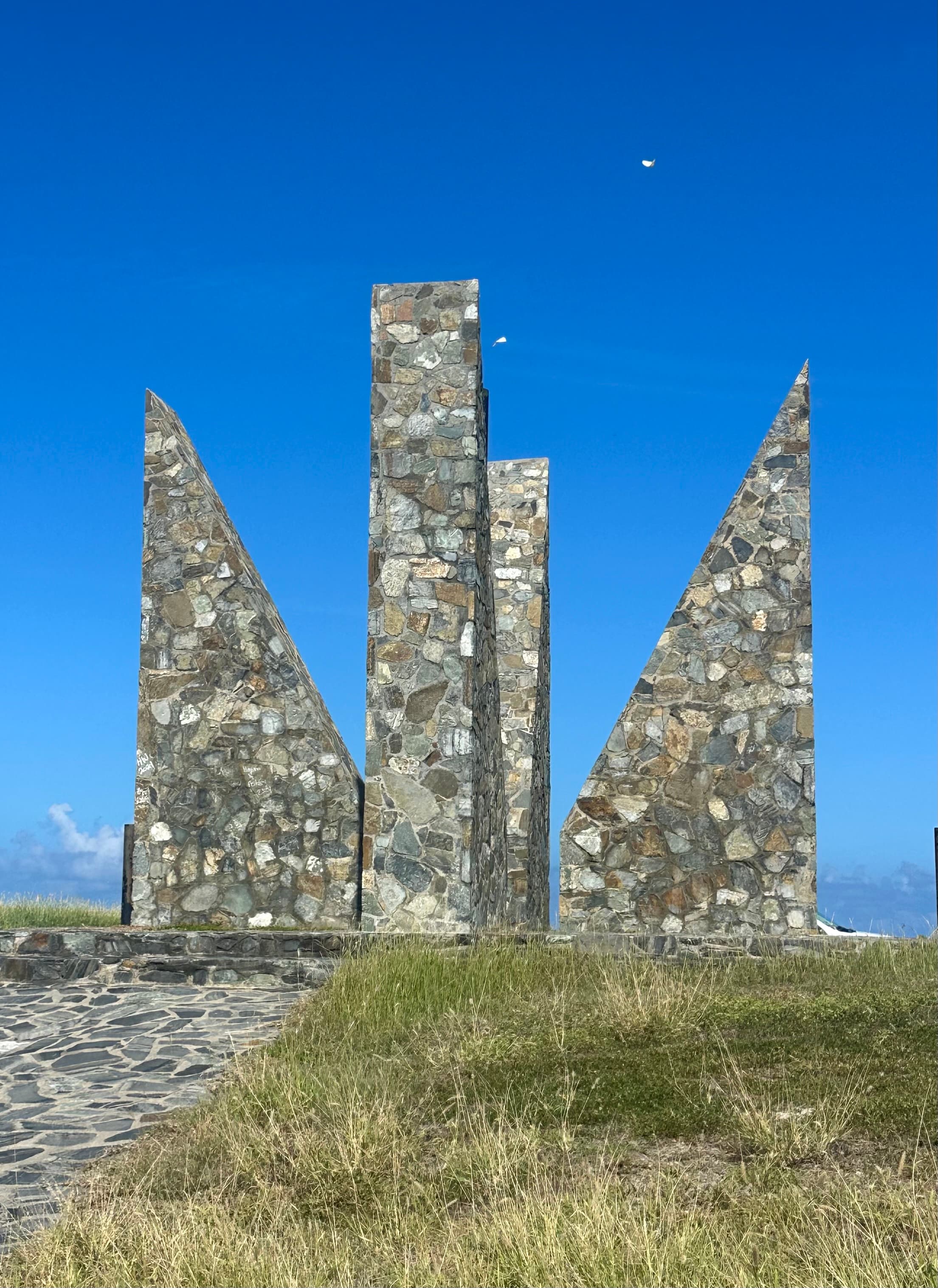
Then take the North Shore route home.
You’ll see another side of St. Croix as the landscape changes and becomes greener again on your way west toward Cane Bay.
.jpg)
Don’t turn the loop into a checklist. Pull over when something catches your eye. Stop for lunch or a drink. Take a photograph.
Take your time.
That’s the point.
For most exploring on St. Croix, you absolutely don’t need a big SUV or four-wheel drive. In fact, a smaller car can be easier to maneuver on the island’s narrower roads — and at Oceans.
But there are exceptions.
One of our favorites is Ridge to Reef Farm, deep in the rainforest, which hosts wonderful seasonal Slow Down Dinners featuring food grown on the farm and elsewhere on St. Croix.
Getting there can be memorable in its own right.
A high-clearance vehicle is strongly recommended, and we prefer four-wheel drive — particularly if it has been raining.
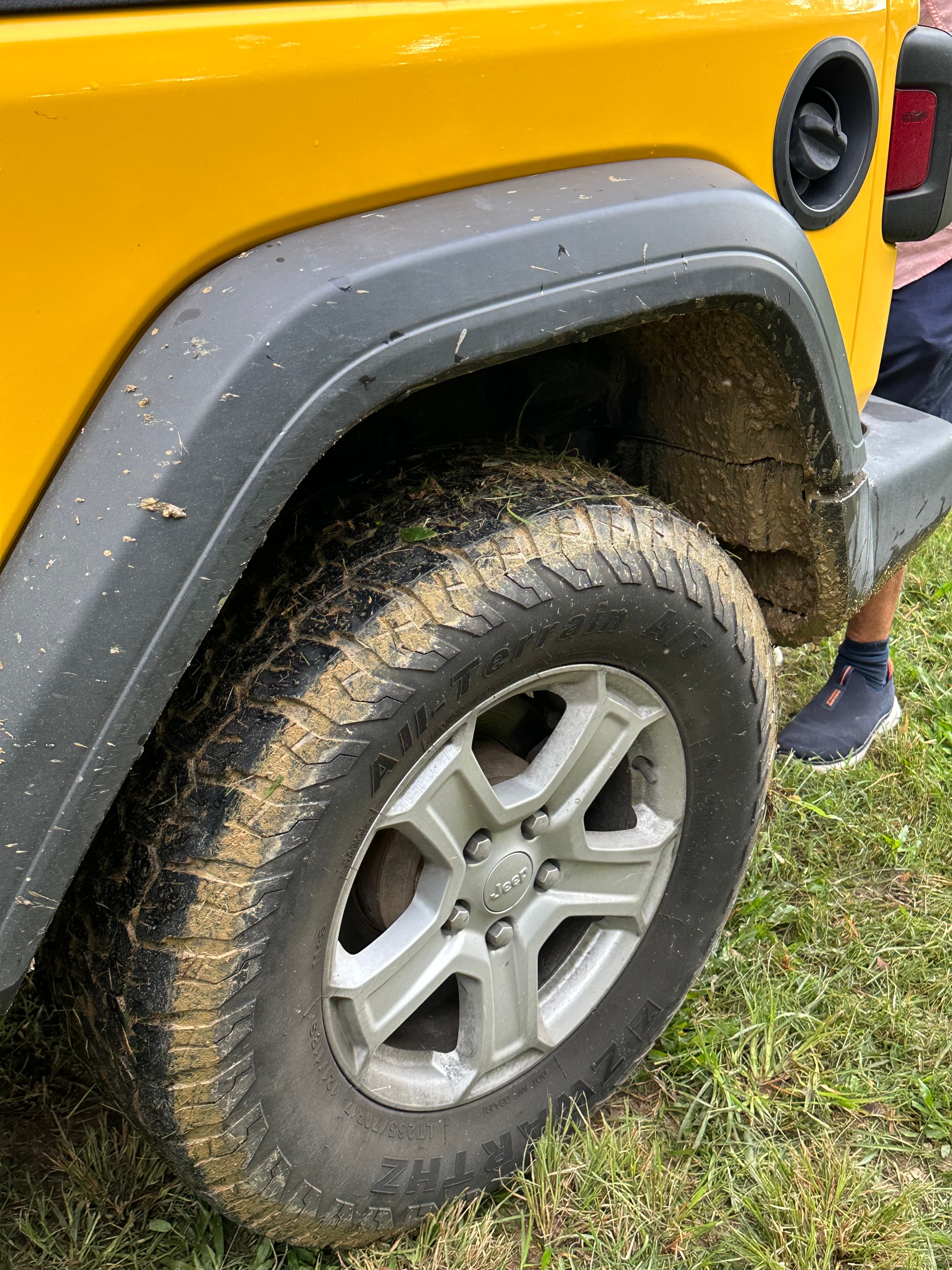
We once went to a Slow Down Dinner in a 4WD Jeep after a heavy rain. We slipped and slid our way along the road, and the potholes were completely filled with rainwater. We couldn’t tell whether we were approaching two inches of water or a hole deep enough to swallow a tire.
We made it.
And dinner somehow tasted even better when we got there.
The road out after a Slow Down Dinner. This is one St. Croix adventure where the right vehicle matters. (May 17, 2025)
%20(1).jpg)
Rent a car — but you don’t need a big one. You can walk from Oceans to Cane Bay Beach and nearby restaurants and bars, but having a car opens up the rest of the island. A smaller car is also easier to maneuver into our compact gated driveway. There’s plenty of roadside parking directly across from the villa if you prefer.
Stay left. Be particularly conscious of it when pulling onto an empty road from a parking lot or side street.
Take your time. Potholes, animals, curves and spectacular views all reward a slower pace.
Don’t blindly trust Google Maps. If the road ahead looks questionable, believe the road.
Know what your rental car can handle. An ordinary car is perfectly fine for most island exploring. Scenic Road, Mahogany Road and some rainforest adventures are another matter.
Learn the friendly horn. A quick toot is often a thank-you or hello, not a complaint.
Let people in. It’s one of those small courtesies that makes driving here feel different.
Don’t worry too much about getting a little lost. St. Croix is only about 28 miles long. Sometimes a wrong turn leads somewhere beautiful.
Most of all, don’t think of driving as simply the way you get from one St. Croix experience to another.
Sometimes, life in the left lane is one of the experiences itself.
.jpg)
.jpg)
.svg)